


7 Tips on How to Choose a Good Durian
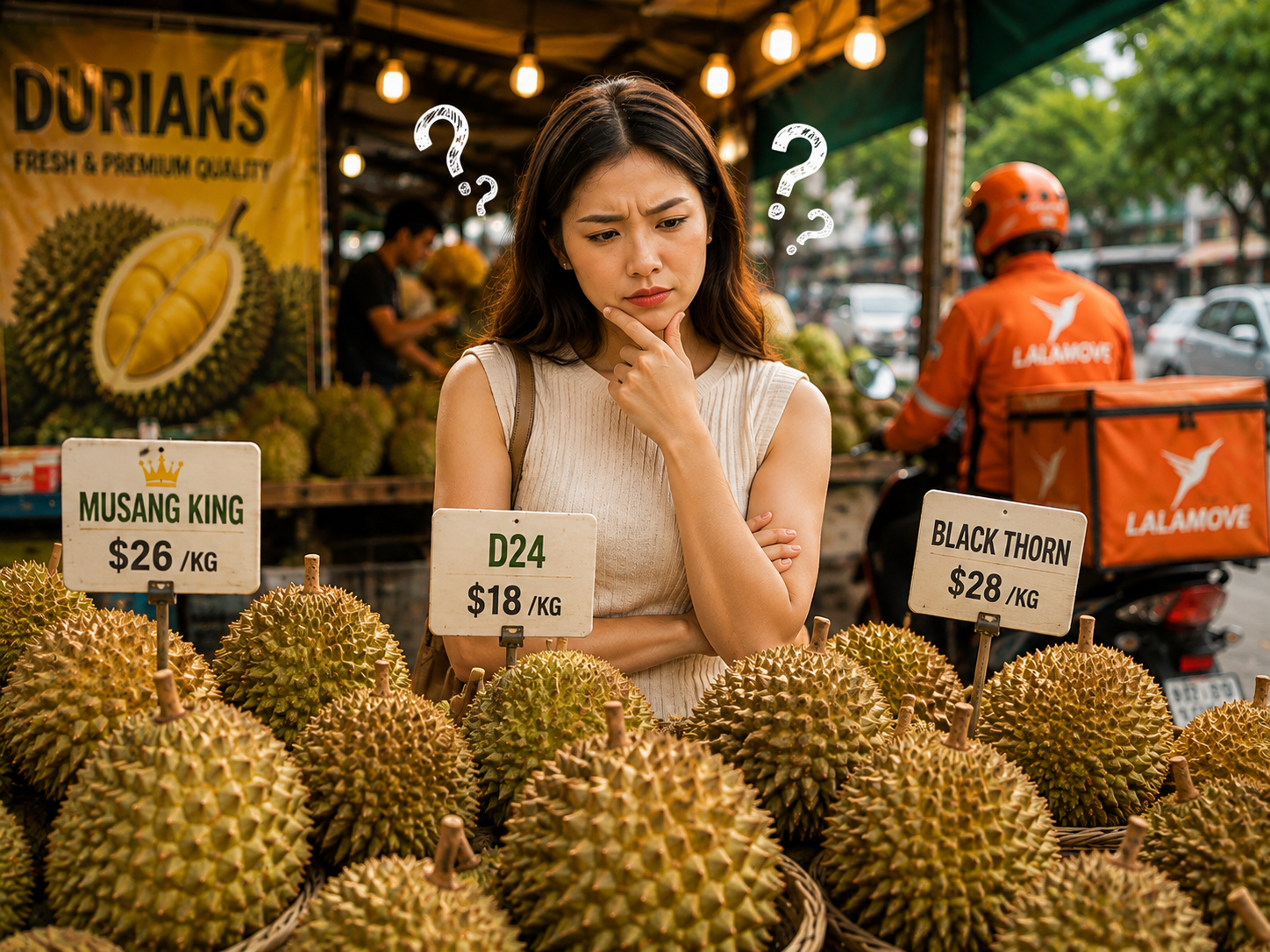
Durian season in Singapore is always something to look forward to. From the rich and bittersweet Mao Shan Wang to creamy D24, aromatic Black Thorn and other popular varieties, there is no shortage of durians to satisfy your cravings.
But standing in front of a pile of spiky durians can be intimidating, especially if you have no idea what separates a great durian from a disappointing one.
Is the greener one better? Should you smell it? Shake it? And how can you tell whether a durian is actually fresh?
If you're wondering how to choose a good durian in Singapore, here are seven simple tips to help you pick the King of Fruits with a little more confidence.
1. Give Your Durian a Good Sniff
Your nose is one of the easiest tools you can use when choosing a durian.
Instead of smelling the thick base of the fruit, try sniffing along the seams or split lines of the husk. A ripe durian should give off a noticeable fragrance. If you can barely detect an aroma, the durian may not be ripe yet. On the other hand, an excessively strong or fermented smell can indicate that the fruit is overripe.
Of course, different durian varieties naturally have different aromas, so don't rely on smell alone. Think of it as your first clue.
Quick tip: No smell could mean too early; an unpleasantly fermented smell could mean too late. You're looking for the sweet spot in between.
2. Check the Durian Stem for Freshness
Before getting distracted by all those spikes, look at the stem.
The colour of a durian's stem can provide an indication of how fresh it is. According to the Singapore Food Agency (SFA), newly harvested durians tend to have green or lighter-coloured stems, while stems become darker over time due to enzymatic browning.
You can also look out for stems that appear particularly dry, dark or shrivelled, which may suggest the durian has been sitting around for longer.
So when comparing two similar durians, the stem can be a useful freshness check.
3. Give It a Gentle Shake
Yes, you really can shake a durian — just make sure you're holding it carefully!
Bring the durian close enough to listen and give it a gentle shake. With a ripe durian, you may be able to feel or hear a slight movement from inside the husk.
As durian ripens and loses some moisture, space develops between the flesh and the shell. This can allow you to feel a slight thump when you shake the fruit.
Don't go shaking it like a cocktail, though. A small, gentle movement is enough.
And if you're not confident doing this yourself, ask the durian seller to demonstrate. Your fingers will thank you.
4. Look at the Shape of the Durian
When it comes to durian, bigger doesn't automatically mean better.
A giant durian might look impressive, but size alone isn't a guarantee of good flesh.
Instead, look at the overall shape. Oval or slightly oblong durians can be good choices, while unusually shaped fruits may contain fewer complete chambers and therefore less flesh.
The ideal appearance also depends on the variety you're buying, so it helps to know what your chosen durian is supposed to look like.
For example, Mao Shan Wang, D24 and Red Prawn all have their own identifying characteristics.
Which brings us to an important point…
5. Know Which Durian You're Buying
Not every good durian tastes the same.
Before asking for "the best one", think about what you actually enjoy.
Do you like your durian sweet and creamy? Or are you firmly on team bitter and intense?
Some of the varieties commonly found in Singapore include:
- Mao Shan Wang (Musang King): Famous for its rich, creamy and bittersweet flesh.
- D24: Generally smoother and milder, with a balanced flavour.
- Black Thorn: A premium variety known for its rich and complex flavour.
- Red Prawn: Recognisable for its softer, often pinkish-toned flesh and creamy texture.
- Golden Phoenix (Jin Feng): Aromatic with a lighter flavour profile.
Understanding the differences can help you choose a durian based on your taste rather than simply buying whichever variety is the most expensive.
After all, the "best durian" is ultimately the one you enjoy eating.
6. Inspect the Durian Once It's Opened
The real test comes when the durian is cracked open.
Take a moment to inspect the flesh before it gets packed away.
Good durian flesh should generally look creamy and custard-like rather than excessively watery or mushy. However, remember that colour and texture differ between varieties, so don't assume that every good durian needs to have extremely bright yellow flesh.
You should also inspect the husk before buying a whole durian.
SFA advises consumers to ensure that the shell of a whole durian isn't already cracked or open. This helps reduce the risk of contamination.
If you're buying durian that has already been removed from its husk, make sure the flesh is stored in a properly sealed container.
7. Buy From a Reputable Durian Seller
You can learn every durian trick in the book, but there's one tip that's particularly useful for beginners: find a seller you trust.
A knowledgeable durian seller should be able to explain the different varieties available and recommend something based on your preferred flavour, texture and budget.
When buying durian online, SFA also recommends verifying the information provided and purchasing from reputable sources.
And don't be shy about asking questions.
Try asking:
"Is this more sweet or bitter?"
"Which one is creamier?"
"Is this batch fresh today?"
"Can I check the flesh after you open it?"
The more durians you try, the easier it becomes to recognise what you like.
How to Choose a Good Durian: A Quick Checklist
The next time you're hunting for durians in Singapore, remember these seven things:
- Smell it – Look for a noticeable aroma without an overly fermented smell.
- Check the stem – A lighter or greener stem can indicate greater freshness.
- Shake gently – Slight movement inside can be a sign of ripeness.
- Check the shape – Don't assume the biggest durian is automatically the best.
- Know your variety – Choose according to the flavour and texture you actually enjoy.
- Inspect the flesh – Look for flesh appropriate to the variety that isn't excessively watery or mushy.
- Choose a reputable seller – Especially when ordering durians online.
How Should You Store Durian After Buying It?
Didn't finish everything in one sitting? Don't let a good durian go to waste.
SFA recommends refrigerating uneaten durian if you plan to consume it within two to four days. For longer storage, you can freeze the flesh instead.
Keep your durian in an airtight container to prevent it from drying out — and, perhaps more importantly for everyone else sharing your fridge, to stop that unmistakable durian aroma from spreading.
Ready to Pick Your Next Durian?
Choosing a good durian doesn't have to feel like a guessing game. Start with the basics: smell, stem, sound, shape and flesh, then discover which varieties best suit your taste.
And once you've picked the perfect durian, the next challenge is getting it home fresh and fuss-free. Whether you're buying a box for yourself, sending some to family and friends, or ordering from your favourite durian stall, Lalamove makes it easy to get your durians delivered straight to your doorstep with on-demand delivery across Singapore.
So go ahead and pick your favourite — we'll handle the journey home.
Download the Lalamove app today!