


Choosing a logistics partner is one of the most consequential operations decisions you'll make. It shapes how your business handles changing demands, routes, and delivery needs. The right partner absorbs demand spikes, covers the routes your own vehicles cannot, and keeps every delivery visible from booking to drop-off. The wrong one shows up as missed dispatches, idle trucks, and a finance team chasing receipts. This guide breaks down the key criteria that define the best logistics company for businesses in the Philippines — a checklist you can run against any provider before you sign.
How Do You Choose a Logistics Provider for Your Business?
To choose a logistics provider, weigh it against six practical criteria before you sign anything: fleet range, capacity on demand, account control, system integration, insurance coverage, and cost structure. A provider that scores well on all six can carry an operation from first-mile pickup to last-mile drop-off without forcing workarounds.
What should businesses look for in a delivery partner?
The short answer: a partner whose fleet range, on-demand capacity, and goods protection match how you actually move loads — not the one with the lowest price per trip. The six criteria below turn that into a checklist you can run against any provider.
1. Fleet range that spans your smallest and largest load
Most operations do not move one kind of load. A manufacturer may courier documents by motorcycle, transfer parts between facilities by van, and move finished pallets by truck in the same week. A logistics provider in the Philippines should cover that entire spread on a single corporate account, so you are not stitching together three vendors with three billing systems.
2. Capacity on demand, not just on schedule
Contracted haulers work well for volume that is agreed in advance. The gap is the delivery that gives no notice: the order that came in this morning, the stockout at a branch, the vehicle in the yard that is too small for today's load. Look for a partner that can give you capacity to respond when unexpected delivery needs come up, not just volume agreed in advance.
3. Control your whole team can use
An enterprise account is only useful if operations, finance, and procurement can all work from it. Look for multi-user access for authorized staff, real-time tracking, a centralized wallet, and monthly statements, so delivery activity is visible and auditable without spreadsheets on the side.
4. Integration with the systems you already run
If your team books every delivery by hand, fulfillment becomes a bottleneck as orders grow. Stronger business logistics solutions connect to your systems through an API, letting your platform and Lalamove's dispatch pass orders back and forth automatically, so nothing needs to get re-encoded by hand.
5. Protection when something goes wrong
Goods in transit carry risk, and the difference between providers is what happens after a mishap. Ask two questions: what coverage is automatic on every delivery, and what optional protection is available for high-value loads. Also ask what the coverage is subject to, since every policy has terms and an assessment process.
6. A cost structure that matches your volume pattern
Owning a fleet means financing, insuring, maintaining, and parking vehicles even in the weeks they barely move. For businesses whose volume rises and falls, a pay-per-use model converts that fixed overhead into a variable cost: you pay for capacity in the weeks you actually use it, instead of paying for vehicles year-round whether they move or not.
What Is the Best Logistics Company for Businesses in the Philippines?
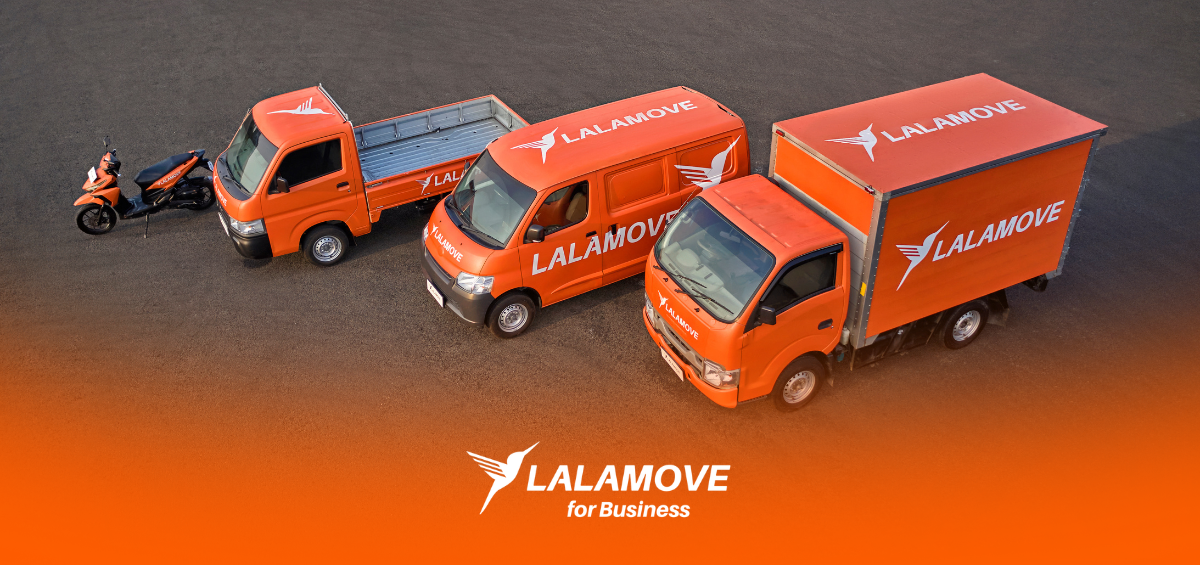
The best logistics company for a business in the Philippines is the one whose fleet, technology, and insurance coverage match how that business actually operates. Lalamove covers that range on a single corporate account: motorcycles and sedans, 1,000 kg and 2,000 kg vans, and trucks at 3,000, 5,000, 7,000, and 12,000 kg, all bookable on demand. For medium-sized companies and large enterprises with changing delivery needs, that means one account instead of several vendors.
In practice, that range looks like one company operating across three vehicle classes in a single day. A retail group sends signed contracts across the city by motorcycle in the morning, restocks a branch with a 2,000 kg van at noon, and books a 12-ton truck for a warehouse-to-warehouse transfer in the afternoon, all on the same account, with one billing record at the end of the month.
Control and visibility built for teams
A Lalamove corporate account gives authorized users across operations, finance, and procurement shared access to bookings, real-time tracking, a centralized wallet, and monthly statements. Multi-stop routing consolidates several drops into one trip, which matters for branch replenishment runs and multi-customer delivery days.
Integration for multi-channel fulfillment
For e-commerce operations, Lalamove connects through an API so deliveries are booked and tracked from inside your own ordering system, and through a direct Shopify integration that can quote delivery cost at checkout. Businesses selling across online and offline channels can manage delivery bookings in one place instead of juggling per-channel processes.
Protection on every delivery
Business-account deliveries are automatically insured for up to ₱75,000 through Pioneer Insurance, subject to policy terms. On top of that, enterprise clients can avail of Goods Protection Promises, a separate, optional program that extends coverage for high-value shipments up to ₱8 million, priced per booking and subject to assessment and its own terms. Automatic insurance and optional protection are two distinct layers, and together they let a business match the level of cover to the value of the load.
Support that scales with your account
As delivery volume grows, Lalamove's corporate account tiers add higher-touch support, such as dedicated account management and advanced analytics, so the service an enterprise receives scales with the operation it runs.
When a Different Setup Makes Sense
No single provider is the right answer for every operation, and an honest evaluation should recognize where the fit ends. If your volume runs on fixed daily routes at high frequency, a dedicated or contracted fleet can cost less per trip; Lalamove's value in that scenario is as the flexible layer alongside it, covering the deliveries your fixed arrangement was never sized for. If your distribution is genuinely national, note that Lalamove serves designated areas across Luzon and Cebu, with vehicle and route availability varying by location, so a nationwide network will still need more than one partner. And loads that require temperature-controlled or regulated hazardous transport call for specialized carriers built for those requirements.
Key Takeaways
|
|||||||
If your team is evaluating a logistics company for medium to large-sized businesses, the fastest way to test the fit is to run your own delivery week through it. Open a corporate account or talk to the Lalamove business team.
FAQs About Choosing a Logistics Company in the Philippines
What is a logistics partner for a business?
A logistics partner is a delivery provider your business uses continuously. In contrast, a vendor is booked one shipment at a time. A partner gives you access to the vehicle types you need. A partner also gives your team one account for booking and tracking. It covers your regular routes and the deliveries you did not plan. Most operations use more than one partner.
How do you choose a logistics provider in the Philippines?
Choose a logistics provider based on how your business actually moves goods, not on its asking price. Check five things. One account should cover your smallest parcel and your heaviest load. The provider should handle bookings you did not plan for. Operations and finance should be able to work from the same records. The service should connect to the systems you already use. Ask what coverage applies automatically while goods are in transit.
How do you evaluate a delivery provider before signing?
Evaluate a delivery provider by testing it against a real week of your own deliveries. List the loads you moved last week. Include the ones you did not plan. Ask the provider which of those loads it could have carried, at what notice, and in which areas. A provider that covers your busiest week is worth more than one with the lowest rate.
How much volume do you need before a corporate account makes sense?
A corporate account makes sense as soon as more than one person in your company books deliveries. It does not depend on reaching a monthly volume. Lalamove does not require a committed monthly volume to open one. In practice, the trigger is poor record-keeping: For instance, the finance department has to collect receipts from individual staff. Two branches are booking separately, incurring avoidable expenses. Nobody can immediately say what the delivery cost was last month.
Are business deliveries insured?
Deliveries booked through a Lalamove business account are automatically insured up to ₱75,000 through Pioneer Insurance, subject to policy terms. Higher-value shipments can be covered separately through Goods Protection Promises. This is an optional paid program offering coverage up to ₱8 million, priced per booking and subject to assessment and its own terms. The two are separate. The ₱75,000 insurance applies automatically. The higher coverage is purchased per booking.
When is a dedicated or contracted fleet the better choice?
A dedicated or contracted fleet is the better choice when your volume runs on fixed routes at high frequency. On planned, repeating work, the cost per trip is lower. On-demand capacity is for deliveries the arrangement wasn't sized for. These are the deliveries you cannot plan. A rush order comes in with no room in your schedule. A branch runs out of stock. A load is too heavy for the vehicle you own.
Does Lalamove work with medium and large businesses in the Philippines?
Yes. Lalamove provides business delivery for medium-sized companies and large enterprises in the Philippines. The service runs on a corporate account. That one account covers motorcycles and sedans, 1,000 kg and 2,000 kg vans, and trucks at 3,000, 5,000, 7,000, and 12,000 kg. Lalamove serves designated areas across Luzon and Cebu, and vehicle and route availability varies by location.
How does a business get started with Lalamove?
A business can open a corporate account through the Lalamove for Business page. Add the team members who need booking access. Then start booking. There is no committed monthly volume to agree to first. You don't need to reserve vehicles in advance or set a fixed schedule before the first delivery.


